Showing posts with label Book. Show all posts

Sunday, September 21, 2014

Gyaffing Around

I finished reading Rahul Bhattacharya's second book, The Sly Company of People Who Care, last week. I haven't read his first book, Pundits from Pakistan. Perhaps the title of the second book intrigued me more. It's a fictional piece about a Cricket reporter who decides to take a year off to stay in Guyana. The first few pages took me some effort to get used to his style of writing. He moves from descriptions of the place, people and culture so freely, interjecting each with conversations and anecdotes that it takes you some time to sleep and wake to the multitude of understanding you are drinking in. You slowly grow into it and then the Guyanese heart, faces, landscape, songs, stories, politics and all the gyaffing just seeps in an osmotic fashion. The writing is visual and linguistically so connected to the place that the vocabulary works as a tool to make you more Guyanese. After all, 43.5 percent of Guyana is of Coolie's blood, labourers from India. There is a Bihari dish called Chokha, you can find its more spiced up version in Bharta. This book is almost like savouring that dish slowly, morsel by morsel, under the humid air of sea and rain forests and a few bites as the last survival food at the end of a long journey, but most importantly, it's the unshakable feeling you are left with when that dish is over, and all you have is an empty tiffin box to stare at and remember the person who packed it for you.

Here are some excerpts from the book that I bookmarked for myself. 

---------------------------------------------------------------------

The mood was very different now. One escapes one's life, for however long, seeking adventure--I think of the Hindi word dheel. This is what kite-flyers in bombay shouted when they wanted the spooler to let loose the thread. I could not fly a kite, as unnavigable to me as chopsticks, but I liked giving dheel, and I liked very much the thought of dheel. So one escapes one's life seeking adventure, and with enough dheel and some luck, that happens. But the thread is anchored. You can only go so far. The impulse must change. Instead of adventure one seeks understanding. It comes with heaviness. The only way to be exempt is to resolutely not ponder, but I was given to pondering. 

---------------------------------------------------------------------

They were whipped to tens, hundreds, and up to a thousand lashes though few bodies still remained alive. The whips were pickled in brine or chilli. Their body parts could be mutilated. They had no rights of any kind: not to family, to language, to names, to faith, to social order. Obliteration. When horror is of such scale, it begins to feel like fantasy, and fantasy is the easier to digest. 

---------------------------------------------------------------------

'Hear wha'happen, brother,' Chabilall said to me after. 'Rafi you ain got to unstand words. Rafi in we blood.'

'Kishore?'

'A great man. But hear wha'happen. When Rafi sing a dance song, you dance. When he sing a sad song, you cry. When he sing a love song, women get fever. Rafi get inside of you, he become you an you become him.'

He went to a line from Suhaani Raat.

Tarap rahe hain hum yahaan, tumhaare intezaar mein.

'Hear how he play with the syllable. He make ten from one. Now that is feeling.'

'You know what it means?'

'Part Part. But I feel it, my brother, I feel it. Let  me tell you one story, my brother. When I was in school, I get suspended one time. because why? Because in the patriotic song I replace "guyana" with "India".'

---------------------------------------------------------------------

The bliss of the city is when it awakens--not the dawn hours haunted by the middle-aged shedding fat or burnt out adolescents returning home, but a little after, when the cleaning machines have brushed away yesterday's evidence and the fresh day is falling crisp as golden wafers, when reasonable people with reasonable habits are coming out of their holes to dot the world with their strange faces, their gestures, costumes, voices, until bit by bit, by living magic, the grand tapestry is made. 

An hour or two in this ambience is enough, You've got the nourishment you need. You've been doused in a particular mood, felt a particular brightness not felt before, been reassured that there are small wonders in the world, and further familiarity is liable to ruin things. 

---------------------------------------------------------------------

I learnt her suspicion extended to detergent. She held that it coloured water grey to fool people about how much it cleaned. her suspicions were not to be misunderstood. I was realizing that she believed in things. She believed in top-loading detergents vs front-loading detergents vs hand-washing detergents, in garbage liners as opposed to plastic bags. Arguably no escapery in her. Her quitting the job, that wasn't to be misconstructed. Her ambition was different from mine, not the flimsy ambition of journeys but of destinations. In five years I wasn't sure if I would be anywhere, but she probably would. She was formidable. She knew childbirth. If we were in battle I suspected I would lose.

She was prepared to tackle the world because the world to her was not absurd. To think the world absurd is a privilege. Those who do so consider themselves enlightened. In fact, it only means their struggles are shallow. Sooner or later the real world will rain down upon them. That, or we shall go slowly mad, or seek recourse in meditation, narcotics, writing.  

---------------------------------------------------------------------

Life was attitude to circumstances, no more no less.

---------------------------------------------------------------------

Sunday, December 1, 2013

सूरज का सातवाँ घोड़ा

कई दिनों तक वह अपने आप को समझाता रहा -- मत चेत उस लहर को जहाँ तेरा पाँव पिछला है, यह सागर की रेत है, यहाँ हर कदम छिछला है। वह समझा क्या रहा था मानो खुद को कोई मंत्र रटा रहा हो। एक ऐसा मंत्र जो उसके मन पर कसे रस्सियों कि गाँठ ढ़ीली कर दे। पर मन तो वह कुआँ है जहाँ दुहाई या सच्चाई, दोनों ही रसगान बस मेढ़क की टर्र-टर्र बनकर ही गूँजते है। इसे मानवीय प्रवित्ति कहें या कुत्ते की दुम, इसे हर बेचैन पल से निकलने के लिए कोई ना कोई प्रवचन कि आदत पड़ जाती है। हृदय के अंदर चलती उथल पुथल में अपने को डूबता स्वीकार करना जरूरी नहीं समझा जाता क्योंकि सारा ध्यान सिर्फ शब्दों के बने बाँध जोड़ने में लगे रहते है। इसी जाल में फंस कर उसने अपने आप को अब यह रटाने लगा -- मत चेत उस लहर को, तू रेत नहीं धुआँ है। ना मथ उस सागर को जब तुझमे ही कुआँ है। अपने आप को ऊबारने की कोशिश में वह इस कदर बेचैन है कि उलझनों का दलदल उसे खींचे जा रहा है। हताश हो उसने अपने झोले में से एक किताब निकाली, शीर्षक था 'सूरज का साँतवा घोड़ा'। कुछ पन्ने वह पढ़ चुका है। सच बात तो यह है कि उसने यह किताब अंग्रेज़ी अनुवाद में लगभग बारह साल पढ़ी थी। सर्दी की छुट्टियाँ थी और छत पर धूप में चटाई बिछा कर करवटें बदलते हुए उसने पूरी किताब को अपने अंदर घोल लिया था। इतने सालों बाद कुछ याद नहीं कि किताब में क्या था पर एक मीठा दर्द भरा एहसास था जो कि अभी भी याद था। एक एहसास जिसने उसे जीवन के दो मूल रूप का परिचय दिया था। आज, इस वक़्त, इस भीतर कि लड़ाई से जूझता वह उस किताब को फिर पढ़ रहा है पर किसी उपचार के रूप में नहीं। पन्ने बस पलटते गए, मन भी उलझनों को छोड़ माणिक मुल्ला (उपन्यास का मुख्य किरदार) के दुनिया में विचरण करने लगा। कुछ पन्नों ने तो बस थाम लिया और जब विदा लिया तो इस कदर कि अब शब्दों के बाँध ध्वस्त लगने लगे। लाख समझा लो, पर इस मन को बाँधना आसान नहीं, इसे फुसलाअों उन किताबों, कविताओं, रचनाओं से जिसने आज भी बारह साल के गर्म धूप को नम नहीं होने दिया, वह धूप भी एक एहसास है।सिर्फ लहर, रेत और कुआँ, आखिर कब तक इन उपमाओं और अलंकारों में अपने मनोदशा की तस्वीर खोजे? हाँ, कदम है तो ठोकर खायेंगे ही और खाना भी चाहिए। पर हर एक ठोकर के लिए एक मल्हम ज़रूर है। उसके नुस्खे अपने है और उसकी रीत अपनी है। शायद इसीलिए जब भी वह रिश्तों और परिवेश के जोड़ और नाप से विचलित हो जाता है तो अपने कर्म के ही शरण में जाता है। यह कर्म ही उसके रथ का सातवाँ घोड़ा है क्योंकि जब उसने सारे छः घोड़ो को बोझिल कर दिया तो सातवें घोड़े ने ही इस मन को भूलभुलैया में घुमा कर नयी दिशा दी। शायद इसलिए अब रटने को कुछ है नहीं बस एक एहसास है। वह इस पल में आगे बढ़ रहा है। ना दुहाई है और ना सच्चाई है अर्पित करने के लिए। कुँए के मेढ़क भी थोड़े शांत पड़ गए है। भूलभुलैया में भटक के अब देखा जाए।

- ख़ुफ़िया कातिल 

'सूरज का सातवाँ घोड़ा', धर्मवीर भारती की लिखी हुई उपन्यास की कुछ पंक्तियाँ --


Sunday, August 4, 2013

Tales from Indian Classics

It has been a terribly long time since I blogged about something substantial. This time of the year is going pretty cramped with work and deadlines, so much that putting blog posts have gone down on the planner pages. But I guess one can only keep up with the untiring wheel as long as the cog lasts.

I went home in June and visited Ara for a few hours. The memories it brought back could be measured in inches of dust settled on the furniture. It weighed me down and then to embrace it further I opened the doors of almirahs where souvenirs of days bygone were preserved. I knew which memory I was scratching the surface of. My father used to do most of the book purchasing from Patna Book Fair and would then carry the lot to Ara. In one of the trips, he must have got this picture book called 'Tales from Indian Classics'. The book had short stories from Mahabharata, Ramayana, Vedas and Upnishads. One of the stories was on an Bhasmasura, an Asura who met his plight by putting his right hand on his head while dancing with Mohini (an Apsara). To mention it as a common experience for most of us, there are some illustrations from picture books read at a younger age that always gets pinned into the visual memory of our brain. It would usually be an artwork that had an unusual imagery, a moment to creep us out, scare us or even make us laugh because it had something beyond the ordinary to it. I took the book out and quickly flipped open the page which had the illustration of Bhasmasura. I wished to see if it could still amuse me, and it did. I wonder if it was just the nostalgia at work or some unknown logic driving my senses.

Bhasmasura

To freshen up the inspiration index, I have scanned a few more pages from the book. The illustrations are done by Pulak Biswas and Sukumar Chatterjee. When seeing work of elder illustrators, the faith gets restored on how the very lack of options is often liberating to the skill and enjoyable to the senses.

Opening Page

Inside Page

Ganapathi

The House of Lac

Bhima and Hanuman

Cousins and Enemies

Bakasura

Gayan

Kacha and Devayani

Sundan and Upasundan


Wednesday, April 24, 2013

Kavalier & Clay

It has been a terribly long time since I last blogged. A month long vacation takes its toll in many ways. For the past three months I have been awfully busy on a long project, the details of which will come out soon, but the project just soaked me in so much that I had to turn a blind eye to the ticking dates of the last blog post put up. Now that the project seems to be reaching its end, I can afford to take a breather and talk about the book I finished reading last night, it's called - The Amazing Adventures of Kavalier & Clay by Michael Chabon. The book revolves around the life of two jewish cousins in New York city who made it big in the booming comics industry of the 1930-40's second world war era before getting scattered away. It's a long read, and although it's a work of fiction, it's very well woven around the facts of comic book genre's behaviour during the two decades. Apart from being a well written novel, the author has really seasoned his two protagonist well with each passing pages, you sort of end up believing that these two cousins really existed back then. One of the cousins, Josef Kavalier is shown as the comic book artists who treats his medium as a weapon to fight against the evils of Hitler, at least that's how he begins with it, but slowly he gets engrossed in the beauty of the technique, the breaking of panels and his rendering of precise brush strokes. Comics become his escape door to fight wars first and later on a refuge for his own stories. With each descriptions of his crafted comic book pages, I really felt an urge to see them. In fact I searched for his name on google to see if there are any samples one could see of what these comic book pages must have looked like. Comics, considered a degraded art form back then, had an easy to afford liquorish charm to it. Through this step child of an art form when the two cousins live their belief and secret passions, one realises how strong its role is in a society where war rages on each day's account. Michael Chabon has rightly used Harry Houdini as the metaphor for comics. Here are some of my favourite parts from the book - 

"Forget about what you are escaping from," he said, quoting an old maxim of Kornblum's. "Reserve your anxiety for what you are escaping to."

He and his father had in their jocular, gingerly fashion loved each other, but now that his father was dead, Joe felt only regret. It was not just the usual regret over things left unsaid, thanks unexpressed and apologies withheld. Joe did not yet regret the lost future opportunities for expatiation on favorite shared subjects, such as film directors (they revered Buster Keaton) or breeds of dogs. Such regrets would come only belatedly, a few days after, when he made the realization that death really did mean that you were never going to see the dead person ever again. What he regretted most of all just now was simply that he had not been there when it happened; that he had left to his mother, grandfather, and brother the awful business of watching his father die.

For the last three months I have been strictly away from my graphic novel work, but my appetite seems right now to get back to it. Like Houdini, we are all tied up in our heavy iron chains of everyday obligations and rituals, and we all search for the golden key. The scam gates and rape cases bog the newspaper headlines making you feel like dead soldiers rotting in trenches of an eternal war. We all need a key, an escape... a superhero perhaps.

Thursday, December 27, 2012

Page 25

I believe this will be my last post on the blog for the year 2012. To look back, one of the biggest accomplishment of this year was to quit my job and start work on my book. I had many thoughts muddled in my head during the mid year as to what direction I should take my work to. But with the year coming to an end, it seems pretty sorted for now. Apart from the book, I am glad for the onset of Perch Project too. I am very thankful to Hazel for this, doing this project alone wouldn't have been possible. A bow of honour to all the people who have shared the enthusiasm towards Perch Project. Your 'likes' and 'shares' are not just mere social network tools, but a fuel to the project's belief and will to grow further. The fat bird of Perch Project blesses you all. No doubt that next year awaits a work avalanche with many plans brewing, but I hope to take it well and merge it with some travel plans too. 

To talk a bit more about the book, I doubt that if I can have a definite calendar for it to wrap it up. Many other projects need to start growing simultaneously, and the book is something I wouldn't want to hurry on. Although, I have to be cautious to not let it slip off. 

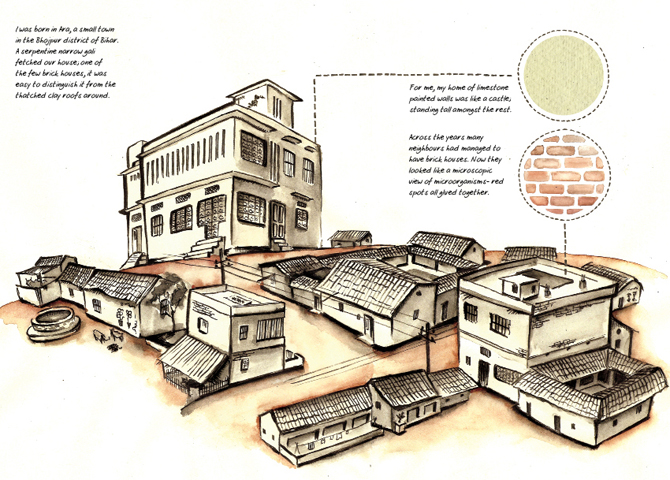
Last week, I finished the 25th page of my book. This page came from a snug hole memory of my childhood days. The days when the whole locality used to gather up at the few homes where a T. V. set was available to watch the evening films being shown on Door Darshan. We had a 'Weston' television, neighbourhood  kids, and some elders would gather in our drawing room for the Saturday films. Jaggery, puffed rice and roasted gram was the popcorn of a small town. Those who had other task to move on to or couldn't find a place inside would watch the film through the window grill. 

I believe such evenings don't belong to just my childhood, but of many others who grew up in late eighties and early nineties. I have tried to capture those evenings in the page 25 of the book. I imagined it to be more of a crowded page, but subconsciously the elements from the drawing room's decor propped into the page too while I was penciling. It seemed justified to let these things retain its share in the page. Here are the three step process of drawing, inking and colouring the page - 


Saturday, December 15, 2012

Ionicus

Whenever I am in the MG Road vicinity, tea at Koshy's and then strolling down to Blossom's on Church Street has become an old habit. At Blossom's I would drop my bag at the counter and climb the stairs up to look for new graphic novels and hunt for old editions of classics. During one of such activities, I came across the P. G. Wodehouse series published by Penguin with covers done by an illustrator who signed off as 'Ionicus'. The cover had crumpled edges, but the artwork it embodied had crisp, clean lines demarcating the skilled use of watercolours. It had a simplicity and beauty one would like to belong to, and the pictures told the reader what awkwardness was stored in the book. From that day onwards, I have often spent a lot of time excruciating my eye filtering such publications out of huge stacks lying in the back shelves of Blossom's. With luck, I have found four so far. I believe, the staff only shell out a few copies out to keep luring me in time after time. And like a cat, I know the precious bait too well to surrender. If any of you lucky ones have got a copy of Ionicus's illustrated cover, please do mail me a scan of it on somsesh@gmail.com. I will be extremely grateful to you for this. 


Ionicus was the pen name of Joshua Armitage (26 September 1913 – 1998), an English illustrator.
He is best known for drawing the covers for a wide range of Penguin editions of P. G. Wodehouse, though he also contributed cartoons and drawings to Punch for more than 40 years, and provided cover designs and text illustrations for nearly 400 books in total.
- Wikipedia

Friday, November 16, 2012

The Hitchhiker's Guide to the Galaxy


The major problem, one of the major problems, for there are several, with governing people is that of who you get to do it. Or, rather of who manages to get people to let them do it to them. To summarize: it is a well known and much lamented fact that those people who most want to rule people are, ipso facto, those least suited to do it. To summarize the summary: anyone who is capable of getting themselves made president should on no account be allowed to do the job. To summarize the summary of the summary: people are a problem.

Douglas Adams, The Restaurant at the End of the Universe

I finally finished reading the five novel compilation of 'The Hitchhiker's Guide to the Galaxy' yesterday. To write such a book one has to be a genius and a champion of wit mixed with a general sciency mish mash. Apart from his regular gymnast with the space-time-probability axis, Mr. Douglas Adams' knack of inventing character names is highly commendable. It's like he just noticed an object, played around with it's spelling and then named it a small little planet at the center of the third probability axis of infinite improbable drive. Apart from his usual excellence in making up things, he quite enjoyed taking a dig at other irritating aspects of being an earthling, say religion, McDonalds, credit cards, telephones, astrology etc. And one of the great things about the book is how quotable it is. Flip open any page and you will have something clever written down. You can literally calendar your social network feeds with these quotes. Here's one more - 
Nothing travels faster than the speed of light with the possible exception of bad news, which obeys its own special laws. 

Friday, October 19, 2012

Back to the Book

It was around three years back when I started working on a graphic novel for my final graduation project. I managed to finish only a small part of the section as final pages from the script. Then, I graduated, changed cities, switched jobs, travelled a bit, did freelance work in between but there was one thought that never left me at rest. I was losing time for my book. I knew that I would get back to it eventually but never affixed a date for it. To look back, three years of wait did me good. I was naive as a storyteller and draftsman. But, in the last three months I felt that I have become good enough, good enough to tell a story. And then there was no point waiting to become better. 

Yesterday was my last day of work at Brainwave. I had a good run of working on seventeen prints for the magazine. It made me inventive and playful with my drawing skills. Thanks to Brainwave, I feel ready to take this leap and I am very sure that it will take me somewhere good. At least, I won't have a regret to harbour my days with. 

To talk of my plans with this book, I am giving myself 400 days with it. I have the script, the sequences are etched in my head, all I am doing now is picking each small section, story boarding it quickly, then pencilling, inking and finally the colouring. The text editing and typography are left for the last lap of my run. 

It's funny how making a book can make you pop inspirational quotes ever so often. I believe I do it just to encourage myself. I will share one here - 
'Make a good book, not a great one.'
When you intend to make a great book, it's easy to lose the honesty of your voice. You will look for things that made other books great and in the process may replicate it in your work. You will borrow so much that your own truth would lose its shine. Do what your book demands and don't give into gimmicks. Trust me, it's easier said than done. 

To reveal a bit of the work already done, I am attaching old pages along with the reworked ones. Although, there are some pages which were never pictured in the first draft of my book, but I will save it for the next round of shows. 
First draft, 2009

New version, 2012


First draft, 2009

New version, 2012


I will also continue to do small freelance work alongside my book, if any of you have something suitable for me, then do write to me - somsesh@gmail.com